Management of Tension Headaches

Headaches (HA) can significantly alter a person’s quality of life. Moreover, they can interfere and sometimes even prevent an individual from performing important activities such as going to work, attending school, or participating in group activities such as sports, music programs, holiday gatherings, and more. The focus of this month’s Health Update is on Tension-Type Headaches (TTH), a common “primary headache” with tremendous socioeconomic impact.
Compared with migraine headaches, tension-type headaches are actually more common and can be equally as disabling. A recent study reviewing popular treatment approaches for TTH reported that establishing an accurate diagnosis is important prior to beginning treatment and finding “…non-drug management is crucial.” Recommendations regarding treatment also include becoming educated about TTH, obtaining reassurance, and identifying trigger factors that can precipitate a TTH. Psychological treatments with scientifically-proven benefit include relaxation training, EMG biofeedback, and “cognitive-behavioral therapy” (CBT). Physical therapy, chiropractic, and acupuncture are widely used, but further research supporting these approaches is needed. The researchers state “simple analgesics” are the primary drug choice for TTH, but they strongly oppose the use of combination analgesics, triptans, muscle relaxants, and opioids, “….and it is crucial to avoid frequent and excessive use of simple analgesics to prevent the development of medication-overuse headache.” They state that the tricyclic antidepressant amitriptyline is “drug of first choice” when treating chronic TTH, but they point out side effects can be significant, thus hampering their use. The researchers conclude that the treatment of frequent TTH is often difficult, and multidisciplinary approaches can be helpful. THIS IS WHERE CHIROPRACTIC FITS IN! These researchers state that non-drug approaches as well as medications “…with higher efficacy and fewer side effects [are] urgently needed.” They advise that future studies need to focus on optimizing treatment programs to best suit the individual patient utilizing psychological, physical, and pharmacological-treatment approaches.
So, what can chiropractic bring to the table in this “team” treatment approach? First of all, it is non-drug oriented, the need of which clearly was emphasized in this study. Second, the presence of muscle tension at the base of the skull/top of the neck can be addressed VERY SPECIFICALLY with spinal manipulation of the cervical spine, active release, myofascial release, trigger point therapy, manual cervical traction, and more! Third, the use of NON-PRESCRIPTION nutrients such as ginger, tumeric, boswellia, Bromelain, white willow bark, fish oil/omega-3 fatty acids are all non-drug (with fewer potential side effects) options that facilitate in controlling inflammation. Using a home cervical traction device can also be VERY HELPFUL! Specific exercise training aimed at muscle relaxation, stretching, and strengthening (especially the deep neck flexors) can ALL BE MANAGED by a doctor of chiropractic!!!
Shaw Chiropractic & Sports Injury Center serves Des Moines, Clive, Waukee, and surrounding communities.  For more information call (515) 987-6332 or visit shawchiroandsport.com

Chiropractic Management of Neck Pain

sitting-at-a-computerNeck Pain is a very common condition that drives many patients to seek chiropractic care. Treatment planning typically includes four primary goals: 1) Pain Management; 2) Structural Realignment; 3) Functional Restoration; and 4) Maintenance / Prevention.

1) PAIN MANAGEMENT: Getting rid of pain is the primary focus of ALL patients in the early stages of a neck injury. If we use the acronym “PRICE” (Protect, Rest, Ice, Compress, and Elevate), the first three apply when it comes to neck pain. We “protect” our neck by avoiding or changing the way we go about doing things such as our sleep position (this often prompts a “proper pillow discussion”), adjusting the outside rearview mirrors of our car (if you flair the outside mirrors outwards, it opens up the “blind spots” and may prevent a collision, especially if you cannot rotate your neck very far), and modifying other ADLs (activities of daily living).


The bottom line is: if an activity creates a sharp pain sensation, it is a “warning sign” to modify or stop WHATEVER it is that you’re doing. Wearing a cervical collar for a SHORT duration of time can qualify for both “Protect” and “Rest.” Try resting your neck on a pillow when reading or watching TV, as it allows the neck muscles to rest. A cervical traction device can help reduce muscle spasm, improves flexibility (range of motion), and reduce pain. Alternating “Ice” and heat can be even more effective, as it “PUMPS” out inflammation or swelling.

Heat is also a good natural muscle relaxant and ice reduces swelling (inflammation), both of which can help reduce pain. There really is no hard and fast rule as to how long you should continue using ice (days, weeks, or months) – if it helps, use it (unless you are hypersensitive and frostbite easily, in which case limit the ice time). However, heat can worsen a condition if it’s applied too soon or too long. Anti-inflammatory herbs like ginger, turmeric, boswellia, and others are very effective and actually may be BETTER than ibuprofen, Aleve, or aspirin. Recent studies indicate that there may be a delay in healing when over-the-counter pain medications are used, and the recommendation is to AVOID these drugs so healing won’t be delayed!

2) STRUCTURAL REALIGNMENT: The goal here is to improve (to the best of our ability) faulty bony misalignments that frequently exist in the neck, upper, middle back as well as the low back, as all can contribute to neck pain. This is also a great long-term goal, as it may help PREVENT future episodes of neck pain.

There is a natural process of aging called osteoarthritis that none of us can avoid, but allowing faulty curves and bony misalignments to persist may actually accelerate this degenerative process! Your Chiropractor may have you lie on a tightly rolled up towel (a frozen water bottle often feels even better) placed behind the neck and when it’s comfortable, performing this on the edge of the bed is a great way to re-educate a reversed cervical curve (and, it feels GREAT!). Even a heel lift in the shoe of a short leg can help the neck! Spinal manipulation, manual mobilization techniques, and trained exercises all address this treatment goal quite effectively!

Shaw Chiropractic & Sports Injury Center serves Des Moines, Clive, Waukee, and surrounding communities.  For more information call (515) 987-6332 or visit shawchiroandsport.com

Why Nighttime Pain with Carpal Tunnel?

Chiropractors are often asked, “Why does Carpal Tunnel Syndrome (CTS) bother me so much during the night?” Let’s take a look!
The carpal tunnel is made up of eight small carpal bones that bridge the forearm to the hand. Without these eight little bones, the motion at the wrist would be very restricted and limited to bending a little bit up and a little bit down. Think of all the things you are able to do with a large range of motion at the wrist like tightening a small screw by hand, pulling on a wrench, using a hammer, working under the dash or inside the engine compartment of a car, threading a needle, sewing, knitting, crocheting, and even washing dishes. As you can see, we put our wrists in some pretty strange positions!
Look at the palm-side of your wrist and wiggle your fingers. Do you see all that activity going on? Now, move your eyes slowly towards the elbow as you keep moving your fingers. It is pretty amazing how much movement occurs near the elbow just by moving the fingers! There are actually nine tendons that travel through the carpal tunnel, and these tendons connect your forearm muscles to the fingers. That’s why there is so much movement in the upper half of the forearm when moving your fingers, and in people with CTS, these muscles are usually overworked and super tight. This is why chiropractors work hard to loosen those muscles during treatment! These nine tendons are covered by a sheath, and friction between the tendon and the sheath is reduced by an oily substance called synovial fluid. When we repetitively and rapidly move our fingers, the friction that builds up produces heat, and if the oily synovial fluid can’t keep up, swelling occurs.
Any situation where there is increased swelling in the body can also promote CTS. For example, during pregnancy, hormonal shifts can result in a generalized swelling similar to taking BCP’s (birth control pills). Hypothyroid results in edema or swelling referred to as “myxedema” that can cause or make CTS worse. Some of the inflammatory arthritis conditions such as rheumatoid, lupus, scleroderma, and more can also predispose one to developing CTS. Obesity by itself is a risk factor for similar reasons.
So, why are we so susceptible to CTS symptoms at night? The main reason is that we RARELY sleep with our wrist in a straight or neutral position. We like to curl up in a fetal position and tuck our hands under our chin, bending the wrist to the full extent (90°). By doing so, the pressure inside the wrist “normally” doubles, but in the CTS patient, the pressure can increase by six times! This pinches the median nerve against the ligament that makes up the floor of the tunnel as it travels through the carpal tunnel, which then wakes us up and we find ourselves shaking and flicking our fingers to stop the numb, tingling, burning, pain that commonly occurs with CTS! This is why we prescribe a wrist brace for nighttime use and it REALLY helps! DON’T JUMP TO SURGERY FIRST – TRY CHIROPRACTIC FIRST!
Shaw Chiropractic & Sports Injury Center serves Des Moines, Clive, Waukee, and surrounding communities.  For more information call (515) 987-6332 or visit shawchiroandsport.com

Headaches: Causes and Cures


iStock_000015143546Large 620x324

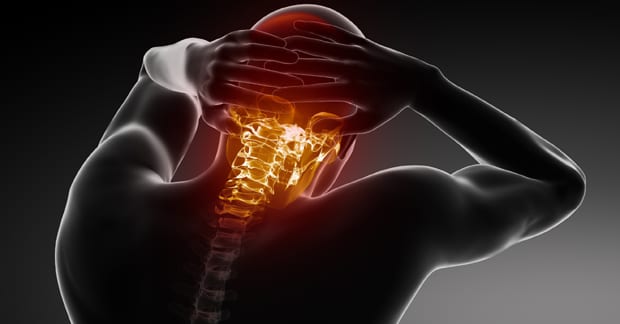
Chronic headaches are a mystery to most of us. Why they occur seems to be the most common question. Some patients’ headaches can be easily explained, but many seem to get headaches for no apparent reason. An often overlooked cause of headaches is the spine and spinal trauma. How does this occur?
Delicate attachments of connective tissue link muscles in your neck areas around your spinal cord. One theory is that tensions can develop in these structures producing head pain. Another possibility to consider is that of forward head posture.
Forward head posture is present when the head is thrust forward in the classic bad posture pose (a little like a turtle neck). This can take out the natural curve in the neck. Since the head is quite heavy (10-14 lbs), the muscles have to counter this weight. When the neck muscles resist the load of the head, they can develop tensions, knots (trigger points) and sometimes spasms. Normally the head is more balanced over the shoulders.
Another cause for headaches is a joint injury/sprain that can occur after whiplash trauma. Over time this may lead to joint blockage where there is not the normal free and fluid motion from side to side. Many times other joints must compensate for this lack of movement with hypermobility. Your muscles can become tense in these areas to protect the spine from unnatural movements.
Since these types of disorders are so common in society they should be ruled out before leaning towards using medications over the long term. It is always important to have an accurate diagnosis before proceeding with treatment. If your headaches have become chronic and just never seem to go away, it is a sign that you are not getting at the cause of the problem.
Correcting neck disorders when they occur is always a best bet. But when a headache seems to come out of nowhere and there is a history of neck trauma in your past, the neck can and should be a part of your headache management strategy. At the minimum, the neck needs to be examined.
Chiropractic care has been shown in multiple clinical trials to help patients with both tension-type and migraine headaches. In these studies, the neck or cervical spine is adjusted based on local problems of poor posture and mobility.
This type of treatment does not carry with it the common risks of side effects seen with prescriptions.
Shaw Chiropractic & Sports Injury Center serves Des Moines, Clive, Waukee, and surrounding communities.  For more information call (515) 987-6332 or visit shawchiroandsport.com
Back Pain and Posture

Low back pain (LBP) is one of the most common ailments that chiropractors treat. That’s probably because MOST of us will suffer from low back pain that requires outside help at some point in our lives! Posture has long been studied as a potential cause of low back pain, and this month’s topic will take a closer look at some recent research discussing this issue.
A December 2014 study looked at low back posture in two groups of LBP patients and its relationship with problems associated with intervertebral disk diseases. Looking at a person from the side, have you noticed that the low back area has an arched or inward curve? This is called the “lumbar lordosis” (or, the “sway back” area), and this can be highly variable in terms of the angle or amount of arch. It normally differs between males and females. Degenerative disk disease (DDD) is a common condition affecting virtually all of us at some point in time. DDD results in narrowing of the disk spaces, which there are five total in the lumbar spine (twelve in the thoracic spine/mid-back, and six in the cervical spine/neck). One particular study evaluated a group of 50 patients with long-term intractable (chronic) low back pain with intervertebral disk disease and a group of 50 chronic LBP patients without DDD that served as a “control group.” Researchers measured the degrees of lordosis, or amount of curve (lumbar lordosis), by looking at the person from the side using two different methods in the two patient groups and compared the data. The group with degenerative disk disease had an overall reduction in the lumbar lordosis curve (less arched) using both methods of measuring. The authors concluded that the patients with intervertebral disk lesions had a straighter, or more flat curve (less sway back), when compared to those without disk degeneration. What they were unable to determine was which came first, the disk degeneration or the reduction in the lumbar lordosis?
This study points out several important points. When treating patients with low back pain, some patients feel better when placed in a bent forwards position, or they favor a flat low back curve. Others have the opposite response, or their position of preference favors a more curved (arched) lower spine. The reason for this difference is that LBP is generated from different tissues in the low back, and some tissues favor or feel better in one position and typically feels worse in the opposite direction when injured. The intervertebral disks in the spine lie between the vertebral bodies and serve as “shock absorbers” for the spine and trunk. The center, or “nucleus,” of the disk is liquid-like and is usually well contained inside the disk, held by a tough, outer fibrocartilage material (the “annulus”). The disk is approximately 80% water, and as we age, the water content gradually reduces and the disk spaces narrow, thus limiting the mobility of that part of the spine. More importantly, DDD usually narrows the size of the canals through which the spinal cord and nerve roots travel. When we bend forward, these canals open up wider placing less pressure on the nerves and/or spinal cord. This is why we often see elderly people leaning on grocery carts when shopping, as it hurts less and they can walk longer / farther. Those with herniated disks tend to be the opposite, as they favor bending backwards as this position shifts the nucleus or liquid center forwards and away from the nerve root thus reducing the pinched nerve resulting in less or complete elimination of radiating leg pain.
We realize you have a choice in whom you consider for your health care provision and we sincerely appreciate your trust in choosing our service for those needs.  If you, a friend, or family member requires care for back pain, we would be honored to render our services.
Shaw Chiropractic & Sports Injury Center serves Des Moines, Clive, Waukee, and surrounding communities.  For more information call (515) 987-6332 or visit shawchiroandsport.com